










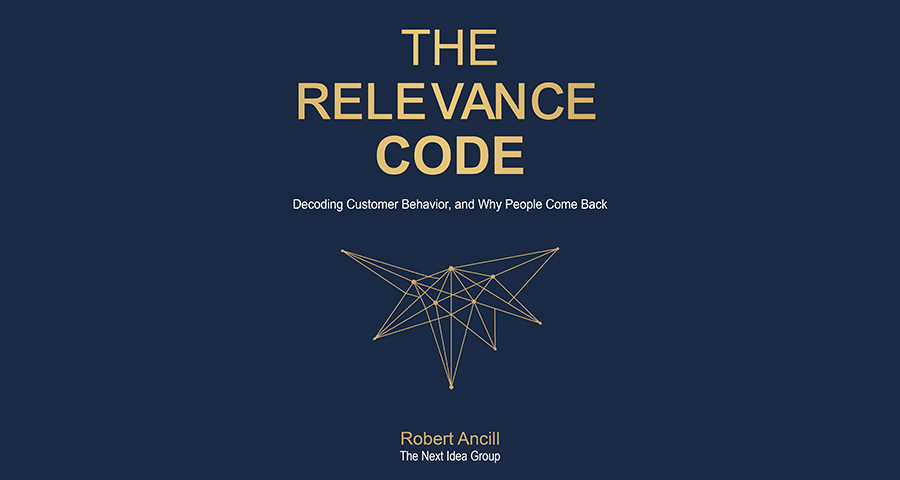
Robert Ancill Releases The Relevance Code: A New Framework Redefining How Hospitality Businesses Win Customers
May 6, 2026: International hospitality strategist and founder of The Next Idea Group (TNI), Robert Ancill, announces the release of his latest book, The Relevance Code, a powerful new framework that challenges how the industry understands performance, growth, and customer behavior.
At a time when restaurants and hospitality brands face rising costs, shifting consumer expectations, and increasing competition, The Relevance Code offers a clear and actionable answer to a critical question: why do customers choose, and why do they return?
Drawing on decades of global consulting experience, Ancill introduces a structured scientific model built around five interconnected elements: relevance, clarity, experience, memory, and return. Together, these define how customers make decisions in real time and how businesses can align more effectively with those decisions.
“Most businesses don’t lose customers because of execution,” said Ancill. “They lose them because they stop making sense. The Relevance Code is about restoring that alignment.”
The book challenges conventional approaches that prioritize activity, more menu items, more marketing, more innovation, without addressing the underlying issue of misalignment. Instead, it provides a disciplined, customer-focused methodology for simplifying complexity, improving conversion, and increasing repeat business.
Through real-world examples, original frameworks such as the Zone of Possible Approval (ZOPA) and the Power Pyramid Theory, and a clear step-by-step application model, The Relevance Code equips operators, owners, and investors with tools to diagnose performance challenges and act with precision.
Ancill is the founder of The Next Idea Group (TNI) and TNI Restaurant Consultants, where he has worked with hospitality businesses across quick-service, casual dining, and luxury segments. His work integrates strategy, design, and architecture to deliver commercially effective, experience-led solutions.
In addition to his consulting practice, Ancill publishes a widely followed industry newsletter with over 15,000 senior-level subscribers and is the author of multiple books on hospitality and customer behavior.
The Relevance Code is available from May 6, 2026 from online book sellers and at: https://www.therelevancecode.
The market does not reward effort. It rewards businesses that make sense.
The Relevance Code is based on the very successful The New Rules of Restaurant Relevance

Hidden Gems: Meet Robert Ancill of The Next Idea Group
Hi Robert, it’s an honor to have you on the platform. Thanks for taking the time to share your story with us – to start maybe you can share some of your backstory with our readers?
My journey really started with a deep fascination for hospitality and the way food brings people together. Early on, I was drawn not just to restaurants as businesses, but to the experience they create, the atmosphere, the storytelling, and the impact they can have on a community.
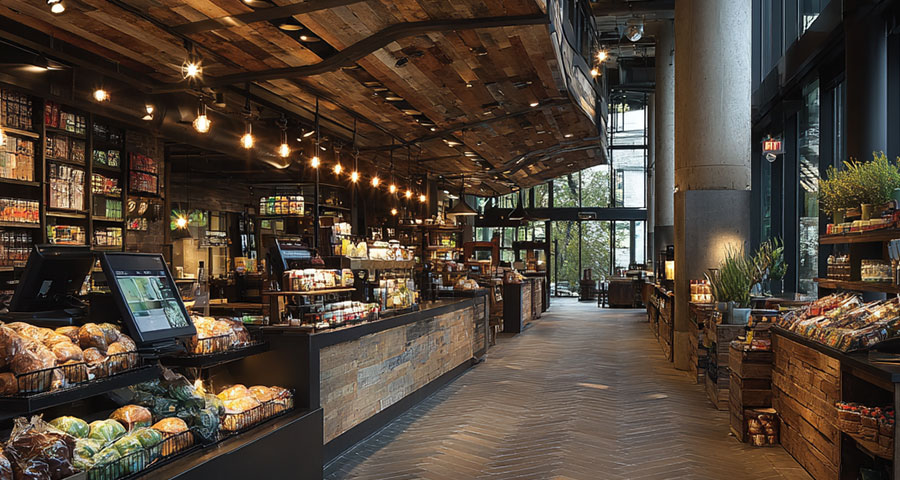
Why QSR Partnerships Are Becoming Essential to the Modern Convenience Store Business Model
For most of its history, the convenience store business has been built around a single promise: speed. Get in, get out, and get back on the road. Fuel drove traffic, packaged goods filled baskets, and foodservice, if it existed at all, was secondary.
That model no longer reflects how consumers behave, how real estate pencils, or how profit is actually created.
Today, the most progressive convenience retailers are no longer asking how fast a customer can leave. They are asking why the customer came in, and what would make them come back. Increasingly, the answer is food. And more specifically, food anchored by strong, intentional partnerships with quick-service restaurant brands. Read More

Restaurant Marketing Has a New Bible — Get Your Copy First!
Coming July 2025, I’m excited to announce the upcoming launch of my new book:
Restaurant Marketing: The Ultimate Guide, a comprehensive, actionable blueprint for restaurant owners, operators, marketers, and hospitality professionals who want to grow smarter, faster, and more profitably.
This isn’t just another marketing book, it’s the most complete, up-to-date playbook for building successful restaurant brands in today’s evolving landscape.

Robots and AI in the Restaurant Industry
Robert Ancill is one of the most well known restaurant futures forecaster – he predicted the fall of casual dining and demise of brands like TGI Fridays, and he also predicted trends in vegan food, non alcoholic bar drinks, and now he is predicting the role of AI and robots in the restaurant industry
The restaurant industry is on the brink of a dramatic transformation; one that will be defined not by culinary trends or design aesthetics, but by robotics, artificial intelligence, and smart infrastructure. As labor costs continue to rise and customer expectations for efficiency continuously increase, restaurant owners and operators are turning toward automation and intelligent systems to redefine their operational models.
In the near future, restaurants will be increasingly shaped by robotic kitchens, android-like service staff, and integrated smart utilities. These innovations promise not only to enhance the customer experience but to fundamentally change the economics of restaurant ownership and management. By reducing human labor by 25 to 30%, restaurants will see a shift in financial strategy: higher upfront investment in technology and maintenance, balanced by significantly lower ongoing labor costs.


Maximize Restaurant Profits with Menu Engineering


Dive into 2025’s trend report to uncover the next big shifts in the food and restaurant sectors.

Why is interior design important for commercial spaces?
Interior design plays a critical role in the success of commercial spaces. It not only enhances the aesthetic appeal of a place but also improves functionality, productivity, and overall customer satisfaction. In this blog, we’ll explore the various reasons why interior design is so important for commercial environments.
Enhances Aesthetic Appeal
A well-designed commercial space can create a visually appealing environment that leaves a lasting impression on customers and clients. It reflects the brand’s identity and can set the tone for the kind of experience people can expect.
Whether it’s a restaurant, office, or retail store, the aesthetic elements of interior design—like color schemes, textures, and materials—are essential. They can evoke specific emotions and moods, significantly impacting how customers perceive a business.
For instance, the choice of colors can be used to create a calming environment or an energetic one, depending on the nature of the business. According to Robert Ancill, CEO of TNI Group, choosing the right colors can be an artistic connection that sets the mood of a space.
An eye-catching design can also serve as a marketing tool. An inviting and stylish commercial space can attract passers-by and entice them to walk in and explore what you have to offer. In the competitive world of retail, for example, an appealing store design can differentiate a brand from its competitors and draw in more customers. Read More

Differentiation – Now defined
Differentiation is the process of distinguishing a product or entire offering from others, making it more attractive to a particular target market. This involves differentiating it from competitors’ products and standing out on the competitive landscape through unique positioning.
In the business world, differentiation is the key to success. It’s the process of making your product or offering stand out from the rest, appealing to a specific target market. By highlighting the unique aspects of your product and distinguishing it from competitors, you gain a competitive edge.
Differentiation can be achieved in two forms: Duplicate and Exclusive.
Duplicate Differentiation involves highlighting features that may be available elsewhere, but executed exceptionally well. For example, a restaurant that prides itself on first-class service is differentiating itself, but the significance of this differentiation may be limited if competitors also offer good service. However, when multiple points of difference are combined, like fresh and fast food at a competitive price with friendly service and engaging surroundings, it creates a powerful unique selling proposition.
On the other hand, Exclusive Differentiation sets your product apart by offering features that are truly unique in the market. This can be a patented technology, innovative design, or unique recipes. When executed well, this type of differentiation can lead to extraordinary success.
However, it’s important not to overlook Duplicate Differentiation even when Exclusive Differentiation has been achieved. Brands like Dyson have demonstrated that paying attention to all aspects of differentiation, including design in addition to patented technology, can maintain and enhance their competitive advantage.
In the restaurant industry, Exclusive Differentiation can be seen in unique recipes, food presentation, and environmental design. Service also plays a crucial role, with modern dining trends offering new opportunities for innovation and differentiation.
By understanding and leveraging the power of differentiation, businesses can truly stand out from the competition and attract their target market.
Customers today hold the key to businesses’ success or failure. Even before interacting with employees, a customer’s opinion of a restaurant can be swayed by a confusing website. It’s all about their Zone Of Possible Approval (ZOPA), which determines their emotional rating when making purchasing decisions. Small details like lukewarm food or overly frothy coffee can be deal breakers. But, with the right touches of duplicity and exclusivity, businesses can skyrocket their ZOPA ratings. Imagine giving a customer flowers on their birthday without any prior knowledge – that’s what makes a lasting impression.
In the competitive landscape of our globalized world, differentiation is the key to survival. The ability to stand out from the crowd, both through duplicating successful tactics and offering exclusive experiences, will determine who thrives and who fails.
At The Next Idea Group, we understand the importance of differentiation in staying ahead in the market. By identifying and creating trends, we give our clients the edge they need to outshine their competitors. So, join us in embracing differentiation and securing a special place in your customers’ hearts.
Author: Robert Ancill
robert@thenextidea.net